
FIERCE and Monument First 5 Help Families Build Confidence to Advocate in Schools
Four English- and Spanish-language workshop sessions gave East Contra Costa County parents practical tools for navigating school systems and advocating for their children.
“I believe that it is very important to advocate and to be direct in what you believe the right thing is for your children.”
This reflection from a parent captures the confidence that grew through a recent collaboration between FIERCE and the Monument First 5 Center.
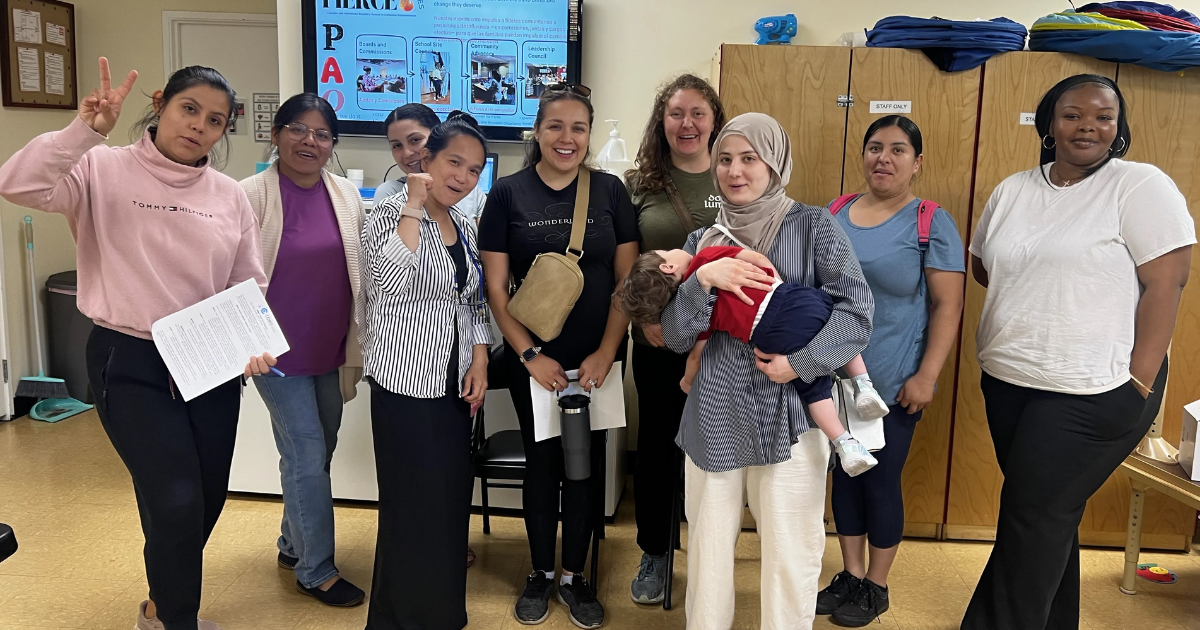
FIERCE’s Policy Advocacy Organizing team facilitated four family advocacy sessions, with two presented in English and two in Spanish. Through role-playing, discussion, practical examples, and shared learning, parents explored how school systems operate and how they can advocate when their children need additional information, resources, or support.
90% of families returned for the second session in their workshop series, reflecting strong interest in continuing to develop these skills.
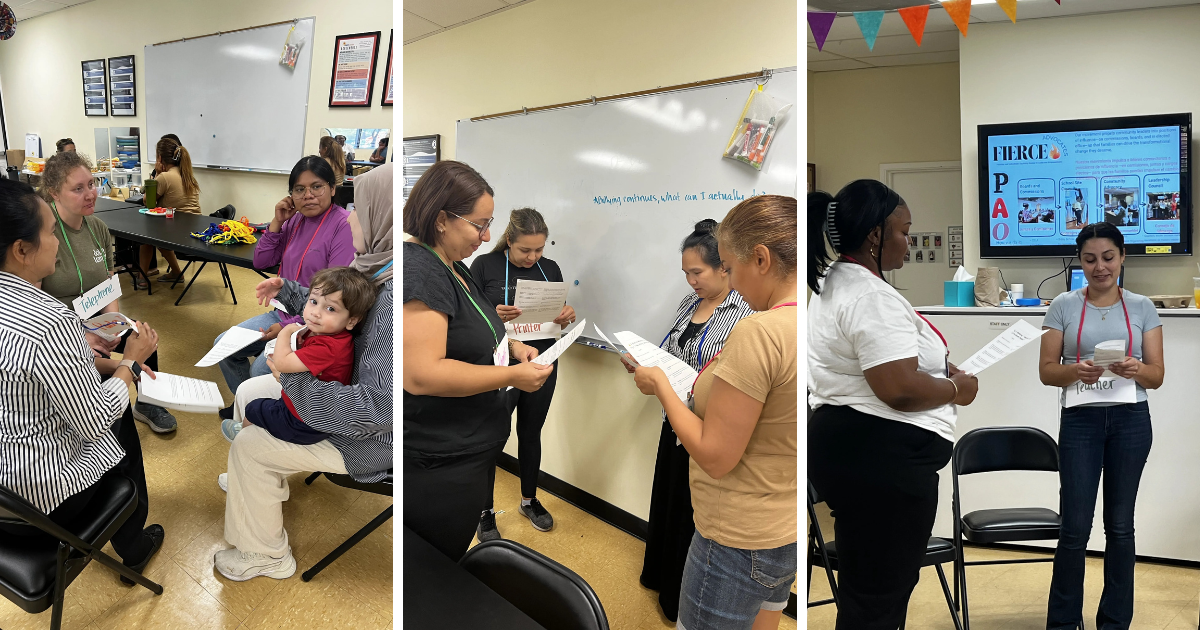
Families participated in role-playing activities called Actos, which explored common inequities within schools.
Participants stepped into roles such as a school administrator, teacher, or frustrated parent. These scenarios allowed them to examine how power can influence a situation and practice ways to communicate, ask questions, and challenge decisions.
Families also explored how the questions they ask can shape the information they receive. Questions beginning with “why” sometimes lead to answers based on tradition or established practice. Participants practiced questions that helped them understand processes, identify who makes decisions, uncover available resources, and determine possible next steps.
This approach helped parents move through school conversations with greater clarity and purpose.
Understanding Different Paths to Support
The workshops also introduced families to Individualized Education Programs, commonly called IEPs, Section 504 plans, and school bullying procedures.
An IEP is a written program developed for a student who is eligible for special education services.
A Section 504 plan describes the aids, services, or accommodations a student with a disability may need to access educational opportunities.
FIERCE used a practical matrix and examples to help parents understand when different processes may apply. Families practiced requesting additional information, asking for more time to review decisions, learning about their rights, and advocating for appropriate resources.
These tools were relevant to parents at many stages:
One-third of attendees had children who were not yet in school
One-third had children in elementary school
One-third had children in middle or high school
One parent explained that “these are good things to know now so that I am prepared for when my kid goes to school.”
That sense of preparation was an important outcome because families could begin building their knowledge before a challenge emerged, giving them a stronger foundation for future conversations with teachers, administrators, and school districts.
Families Learning from One Another
Parents also became resources for each other.
Throughout the workshops, families exchanged experiences, tips, and strategies for navigating schools. Some participants brought questions based on situations they had already encountered, while others considered how the tools might apply as their younger children entered school.
One parent reflected, “Wow.. everything! I have 2 older kids in middle school & didnt know about any of this information.. it’s never too late to learn!”
Another shared, “It impacted me in a very positive way, to make me feel more confident as a young mother.”
These reflections show how advocacy education can strengthen individual confidence while creating connections among families with shared concerns and goals.
Creating Meaningful Learning in English and Spanish
Both workshop series used the same activities, worksheets, and advocacy tools. Families in each language group were engaged and interested in understanding how they could influence their children’s education.
The questions and conversations developed in different ways:
English-speaking parents frequently introduced real-life scenarios and asked how the tools would apply in particular situations. They also expressed interest in understanding differences between charter schools and traditional public schools.
Spanish-speaking parents often spent more time reflecting on the information before asking questions. Their conversations included interest in the history of the United States education system and how that history shaped current school structures.
One parent shared, “Me siento más segura para expresar mis inquietudes, preguntas y opinión,” expressing that she felt more confident sharing her concerns, questions, and opinions.
Across both language groups, families expressed interest in ongoing advocacy support. Their feedback helped FIERCE recognize an opportunity to explore education advocacy office hours, where parents could receive coaching as specific school situations arise.
Extending Advocacy Resources into East Contra Costa County
The partnership allowed FIERCE to bring its education advocacy training to families in East Contra Costa County, where the organization does not typically facilitate workshops.
Monument First 5 identified a need for additional education advocacy resources and connected with FIERCE to help address it. Families’ experiences with the Mt. Diablo Unified School District helped ground the sessions in local questions, concerns, and successes.
Marta Flores, Director of the Monument First 5 Center at Bay Area Community Resources, helped create a welcoming space where parents could learn, share experiences, and connect with resources.
The workshops were part of Monument First 5’s Inclusion Series and were made possible through Contra Costa County District IV Community Impact Funding, with support from Supervisor Ken Carlson.
This collaboration demonstrates how community organizations can combine local relationships and specialized knowledge to respond to needs identified by families.
Bringing FIERCE Workshops to More Communities
Community organizations interested in hosting a one-time FIERCE workshop or a multi-session series can begin by contacting Dulce, FIERCE’s Policy Advocacy Organizing Manager.
One of the first questions Dulce asks is: “At the end of the last session, what do you want your families to walk away knowing?”
That conversation helps determine whether an existing workshop meets the community’s needs or whether the topic, activities, and format should be adapted. The result is a learning experience grounded in the families, goals, and community each organization serves.
